
360‑Degree China SEO: Technical, Content and PR …
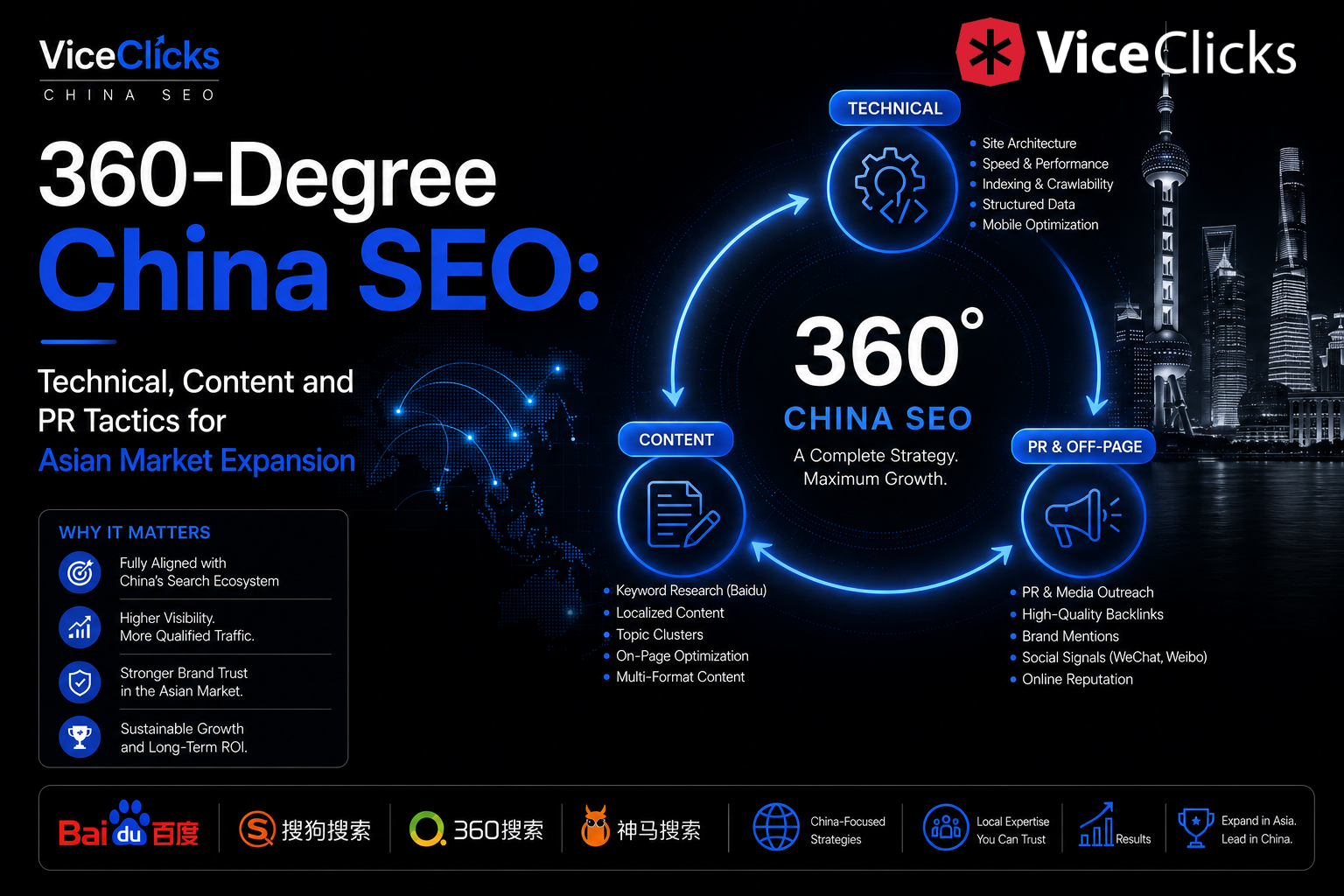
- Why 360‑degree China SEO matters for Asian expansion
- Technical foundation: hosting, performance and crawlability
- Content and keyword strategy for Baidu, Sogou & 360
- PR, backlinks and platform signals
- From China to wider Asian markets
- Measurement and ROI for 360‑degree China SEO
- 90‑day roadmap for implementation
- Resources
Why 360‑degree China SEO matters for Asian expansion
China’s search landscape is dominated by Baidu, with Sogou and 360 Search capturing meaningful shares, and its digital influence ripples across neighbouring markets. Users in Asia watch Chinese trends, consume Chinese content and often rely on Chinese platforms when researching cross‑border brands. A 360‑degree China SEO strategy turns your presence on Baidu, Sogou and 360 into a central growth engine, supporting credibility and visibility not only in mainland China but also in other Asian economies.
Instead of treating China SEO as an isolated project, aligning technical, content and PR tactics under one framework helps international brands build stable, region‑wide momentum.
Technical foundation: hosting, performance and crawlability
Technical SEO is the base of your 360‑degree strategy. Without reliable hosting, fast delivery and clean crawlability, Baidu and other engines cannot fully reward your content and PR work.
Hosting and infrastructure
- China‑friendly hosting. Host your site in mainland China or nearby hubs like Hong Kong, combined with a China‑optimised CDN, to keep latency low for Chinese and regional users.
- ICP and domains. Obtain an ICP licence if you host in mainland China, and consider using .cn or region‑specific domains to reinforce local credibility.
- Secure, stable delivery. Enforce HTTPS, monitor SSL health and configure firewalls to allow Chinese crawlers while protecting against actual threats.
Crawlability and mobile performance
- Static, crawler‑friendly pages. Baidu and other Chinese engines still handle static HTML more reliably than heavy client‑side JavaScript.
- Mobile‑first optimization. Most Chinese users browse via smartphones, so mobile performance, responsive design and quick rendering are critical.
- Webmaster tools and sitemaps. Register with Baidu’s search resource platform and equivalent tools for Sogou and 360, submit sitemaps, and monitor crawl and index data regularly.
Content and keyword strategy for Baidu, Sogou & 360
Content and keywords are the heart of China SEO, but they must reflect simplified Chinese language, local intent and Baidu‑specific ranking behaviour. A 360‑degree approach builds robust topic clusters and pillar content that resonate across Chinese and wider Asian audiences.
Keyword research and clustering
- Use Chinese tools. Combine Baidu Index, Baidu Keyword Planner and insights from local platforms to detect search demand that global tools miss.
- Cluster around intent. Group keywords by informational, comparative and transactional intent (e.g., “是什么”, “对比”, “购买/开户”), then design content tailored to each stage.
- Maintain natural keyword density. Aim for 1.5%–2.5% density for primary keywords within each article, using semantic variations and related phrases to avoid stuffing.
Content formats that perform
- Pillar guides and super pages. Create long‑form, well‑structured guides that fully answer core topics relevant to China and Asia, such as “China SEO for cross‑border ecommerce” or “Trading platforms in Asia”.
- Localized FAQs and Q&A. Add Chinese FAQ sections and Q&A posts that match how users ask questions on Baidu Zhidao, Sogou and forums.
- Region‑aware content. Incorporate examples, case studies and comparisons that include other Asian markets (e.g., China vs Korea vs Southeast Asia), helping content appeal beyond mainland audiences.
PR, backlinks and platform signals
Link building and PR in China rely heavily on local portals, platforms and communities. A 360‑degree strategy treats PR and backlinks as an integrated authority‑building engine that strengthens Baidu SEO and supports regional brand growth.
Editorial PR and backlinks
- Chinese news portals and industry sites. Secure coverage on portals like Sina, Sohu, NetEase and niche industry publications to earn high‑quality backlinks and reach engaged audiences.
- Data‑driven stories. Publish research, reports and insights about China and Asian markets to give journalists and bloggers compelling reasons to cite your content.
- Brand mentions on local platforms. Build consistent brand presence via Weibo, WeChat and Zhihu, generating mentions and links that reinforce authority in Baidu and other engines.
Platform and community signals
- WeChat integration. Optimize your WeChat Official Account with articles that link back to key content, capturing social and referral traffic that supports search performance.
- Q&A and forum participation. Engage with communities on platforms like Zhihu and Baidu Tieba, providing expert answers and referencing useful resources on your site.
- Baidu ecosystem properties. Create or refine Baidu Baike entries and ensure they accurately present your brand, linking to official pages when appropriate.
From China to wider Asian markets
China SEO can act as a springboard into other Asian search ecosystems when executed strategically. Strong technical foundations, region‑aware content and PR presence often make it easier to adapt for engines like Naver in Korea or Yahoo Japan.
Leveraging China SEO assets for Asia
- Shared infrastructure. Performance improvements and mobile‑first design implemented for China also benefit neighboring markets.
- Translatable topic clusters. Pillar content built for Chinese audiences can be localized for Korean, Japanese or Southeast Asian users, reducing content development overhead.
- Regional PR arcs. Pan‑Asian PR stories that highlight success in China plus regional case studies help secure coverage across multiple markets.
Adapting tactics for local engines
- Engine‑specific tweaks. While core themes persist, a 360‑degree approach respects differences in local engines, adjusting metadata, content structure and linking strategies accordingly.
- Language and cultural shifts. Each market needs native‑quality content; China SEO teams can collaborate with regional specialists to ensure accuracy and relevance.
Measurement and ROI for 360‑degree China SEO
To treat China SEO as a regional growth engine, you must measure its impact on traffic, leads and revenue—not just rankings. Enterprise frameworks for China emphasize performance metrics tied to business outcomes.
Key metrics to track
- Organic traffic by engine and country. Track Baidu, Sogou and 360 separately, and observe spillover into other Asian markets over time.
- Conversions and revenue. Measure registrations, purchases or deposits attributed to Chinese organic search, and compare their lifetime value with other channels.
- Visibility and authority indicators. Monitor keyword rankings, impressions, backlink growth and brand mentions across Chinese platforms and regional media.
Reporting structure
- China‑focused dashboards. Build dashboards that show technical health, content performance, PR activity and business outcomes for China.
- Regional impact views. Include metrics that highlight how China SEO efforts contribute to broader Asian growth, such as cross‑market search traffic or shared PR coverage.
90‑day roadmap for implementation
Here is a practical 90‑day plan to start executing a 360‑degree China SEO strategy that supports wider Asian expansion.
- Weeks 1–2: Technical and diagnostic setup. Audit hosting, latency, HTTPS and crawlability; verify your site in Baidu’s search resource platform and other webmaster tools, and submit sitemaps.
- Weeks 3–4: Keyword and content planning. Conduct Chinese keyword research, cluster queries by intent, and design pillar content that speaks to China and broader Asian topics.
- Month 2: Content production and platform activation. Publish key pillar pages and FAQs, launch WeChat and Zhihu content, and refine Baidu Baike entries to strengthen ecosystem presence.
- Month 3: PR campaigns and measurement. Run targeted PR campaigns on Chinese and regional outlets, track backlink and visibility improvements, and build dashboards to connect China SEO efforts to regional business outcomes.
Resources
- ViceClicks China SEO Service — a specialist service that helps brands dominate Baidu and extend their reach across Asian search engines using integrated technical, content and PR tactics.
- A Complete Guide for Doing SEO in China — an in‑depth overview of Baidu‑centric SEO, hosting, content and link strategies for the Chinese market.
- MDN Web Docs — Performance — a high‑authority resource for web performance best practices that support SEO and user experience worldwide.
Closing thoughts
360‑degree China SEO is more than a checklist—it’s a regional growth strategy. When you blend technical foundations, Chinese‑first content and smart PR into one coherent plan, Baidu, Sogou and 360 become engines not just for mainland visibility but for broader Asian influence. By following the framework in this guide and treating China SEO as a strategic pillar, your brand can build durable authority and unlock sustainable expansion across Asia.