
Essential China SEO Checklist for International On …
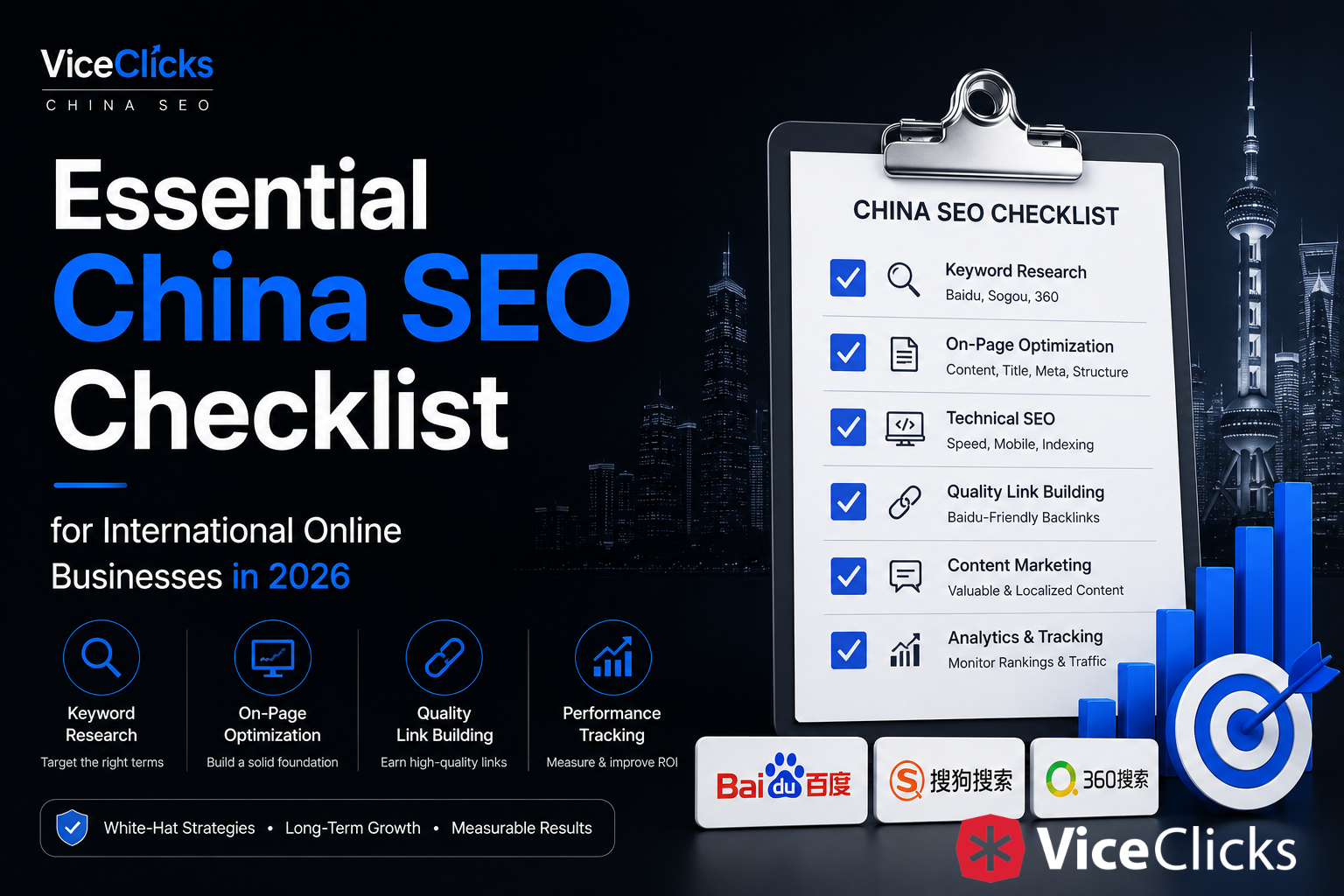
Summary: Entering China’s digital market in 2026 means adapting your SEO playbook for Baidu, Sogou and 360. This essential China SEO checklist is designed for international online businesses that already understand global SEO but need a clear, practical framework for technical setup, content and keyword localization, link and trust building, local UX and analytics. Follow these steps to turn Chinese search visibility into sustainable traffic, leads and revenue.
Why China SEO in 2026 is different
International online businesses often arrive in China with a mature Google‑centric SEO strategy—fast sites, strong content, and solid link profiles. However, China’s search environment is shaped by different engines, regulations, user habits and platform ecosystems. Success depends on adapting to Baidu’s algorithm priorities, Sogou’s social and WeChat ties, and 360’s security‑centric audience, as well as local expectations around language, trust and mobile usage.
This checklist assumes you already have a functioning global website and focuses on the extra steps needed to become truly competitive in the Chinese search landscape.
Technical checklist: hosting, ICP & crawlability
Technical readiness is the foundation of China SEO. If your site is slow, hard to reach from mainland China, or difficult for Chinese crawlers to index, no amount of content optimization will fully compensate.
1. Hosting & performance
- Assess China latency. Test page load times from mainland locations; if users experience multi‑second delays, consider mainland or nearby hosting plus a China‑friendly CDN.
- Plan for ICP filing. For sites hosted within mainland China, obtain an ICP license and display the number clearly in the footer to build trust and meet basic expectations.
- Optimize mobile speed. Minimize JavaScript, compress images, use modern formats where possible and prioritize above‑the‑fold content for mobile visitors.
2. Security & protocol
- Enforce HTTPS. Use HTTPS across all pages with valid certificates; finance, trading and ecommerce brands in particular must avoid mixed‑content or certificate errors.
- Check firewall and CDN rules. Ensure security layers do not accidentally block Chinese crawlers or common Chinese user agents.
3. Crawlability & site structure
- Robots.txt for Chinese engines. Confirm that Baidu, Sogou and 360 crawlers are allowed to access your key directories and pages.
- Sitemaps and index coverage. Generate XML sitemaps with simplified Chinese URLs and submit them via the appropriate search‑engine portals; monitor index coverage regularly.
- Clean URL hierarchy. Use logical, human‑readable URL paths for Chinese content (for example, /cn/ or /zh/ with clear category and article paths).
Content & keyword localization checklist
Content and keywords drive most of your organic demand. In China, localization goes beyond translation: you need to reflect local regulations, cultural nuances and search behavior.
4. Language & tone
- Use simplified Chinese (zh‑CN). Ensure all China‑targeted content is written or reviewed by native speakers, not just machine‑translated.
- Localize examples and references. Replace foreign‑centric case studies and cultural references with China‑appropriate stories, brands and scenarios.
- Adapt tone to audience. For B2B, use clear but formal language; for consumer products, adopt approachable, benefit‑driven wording with familiar local phrases.
5. Keyword research & mapping
- Identify Chinese keyword clusters. Research how users describe your products and problems in Chinese, including branded, generic and long‑tail queries.
- Map keywords to intent. Group queries into informational (“what/how” questions), comparison or review queries, and transactional or signup intent.
- Control keyword density. For each major article, aim for a natural keyword density in the 1.5%–2.5% range for your primary phrase, using synonyms and related terms instead of repeating one exact keyword excessively.
6. Content architecture
- Create pillar pages. Build deep, structured Chinese‑language pillar pages that cover core topics (e.g., “China SEO for online retailers”, “Forex trading in China”) and link out to specialized sub‑articles.
- Local FAQs and Q&A. Add Chinese FAQ sections and Q&A articles that mirror how users ask questions on local platforms; this helps capture question‑driven queries.
- Keep metadata consistent. Ensure titles, meta descriptions and headings in Chinese clearly reflect page content and include priority keywords without stuffing.
Links, trust signals & brand protection
In China’s search ecosystem, trust is often signaled through local links, platform presence and consistent brand details rather than sheer global domain authority alone.
7. Link and authority building
- Target Chinese media and niche sites. Seek coverage, guest articles or data‑driven stories on local portals, industry blogs and forums related to your vertical.
- Encourage natural citations. Publish original research, in‑depth guides and useful tools that Chinese sites will want to reference and share.
- Avoid spammy link schemes. Stay clear of bulk link packages and low‑quality networks; focus instead on fewer, high‑quality local domains.
8. Brand and entity signals
- Consistent NAP. For any local presence, maintain consistent name, address and phone information across your site, map listings and directories.
- Local profiles. Create and maintain verified profiles on major Chinese platforms relevant to your market, and link them to your site where appropriate.
- Monitor brand SERPs. Regularly check how your brand appears on Baidu, Sogou and 360, and take steps to ensure official content outweighs outdated or third‑party information.
Local UX & conversion checklist
Traffic without conversions offers limited value. Chinese users have specific expectations around forms, payment flows and support, and international online businesses must adapt to those patterns.
9. Forms and onboarding
- Simplify initial forms. Collect only essential data at first touch (for example, phone or email plus one key field), and move detailed questions to later steps.
- Local microcopy. Use Chinese labels, error messages and help text that are clear and reassuring rather than literal translations that feel foreign.
- Visible trust and support. Display security badges, local support hours and contact methods prominently on conversion pages.
10. Payments and flows
- Align with Chinese payment habits. Where your business model allows, integrate popular local payment or recharge methods, and explain them clearly for new users.
- Minimize friction. Reduce unnecessary redirects, long loading steps or confusing confirmations that could cause drop‑off from organic visitors.
- Track critical actions. Instrument events for key conversion moments—such as purchase, subscription, registration or deposit—so you can link them to SEO campaigns.
Analytics, reporting & ROI checklist
To justify investment in China SEO, you need measurement that goes beyond basic traffic reports. The goal is to show how Chinese search contributes to leads, customers and long‑term value.
11. Tracking and segmentation
- Separate engines. Segment organic traffic from Baidu, Sogou and 360 so you can see which optimizations work where.
- Define conversion events. Configure analytics to capture registrations, purchases, deposits or other relevant outcomes, with clear goals or events.
- Ensure reliability. Regularly check data completeness from mainland visitors, and adjust tracking implementations if you see gaps or inconsistencies.
12. ROI reporting
- Traffic vs. business KPIs. Present both traffic and business metrics together—visits, conversions, revenue and customer value—to show the full impact of China SEO.
- Attribution views. Use simple first‑touch and last‑touch attribution models to indicate how often Chinese search contributes to conversions, even when other channels are involved.
- Continuous improvement. Make space in your reporting for insights and next steps so each cycle leads to concrete adjustments in content or technical work.
Suggested 90‑day roadmap
This checklist becomes much more actionable when organized into a manageable timeline. Here is a suggested 90‑day roadmap for international online businesses starting or upgrading China SEO in 2026.
- Weeks 1–2: Technical and language audit. Review hosting performance from China, SSL and crawl settings; audit existing Chinese pages for language quality and metadata issues.
- Weeks 3–4: Keyword and content planning. Complete Chinese keyword research, map key topics to pillar pages and FAQ content, and define target keyword density and content structures.
- Month 2: Implementation. Launch improved technical settings (CDN, robots, sitemaps), publish first pillar pages and localized landing pages, and start building local links and profiles.
- Month 3: Measurement and optimization. Finalize event tracking, build basic dashboards, refine forms and flows based on data, and plan the next quarter’s content and outreach based on what works.
Resources
- ViceClicks China SEO Service — specialized support for Baidu, Sogou and 360, tailored to international finance, trading, gaming and online businesses expanding into China.
- MDN Web Docs — Performance — a high‑authority technical resource that can help your team improve site speed and user experience for all markets, including China.
Closing thoughts
China SEO in 2026 rewards international online businesses that treat it as its own discipline. By following a clear checklist across technical setup, content and keyword localization, local link and trust building, UX, and analytics, you can move beyond experimental traffic gains and build a repeatable, measurable search presence in China. Whether you execute in‑house or partner with a specialist, these essentials form the backbone of sustainable success on Baidu, Sogou and 360.