
SMS vs Voice Broadcasting: Choosing the Right Mass …
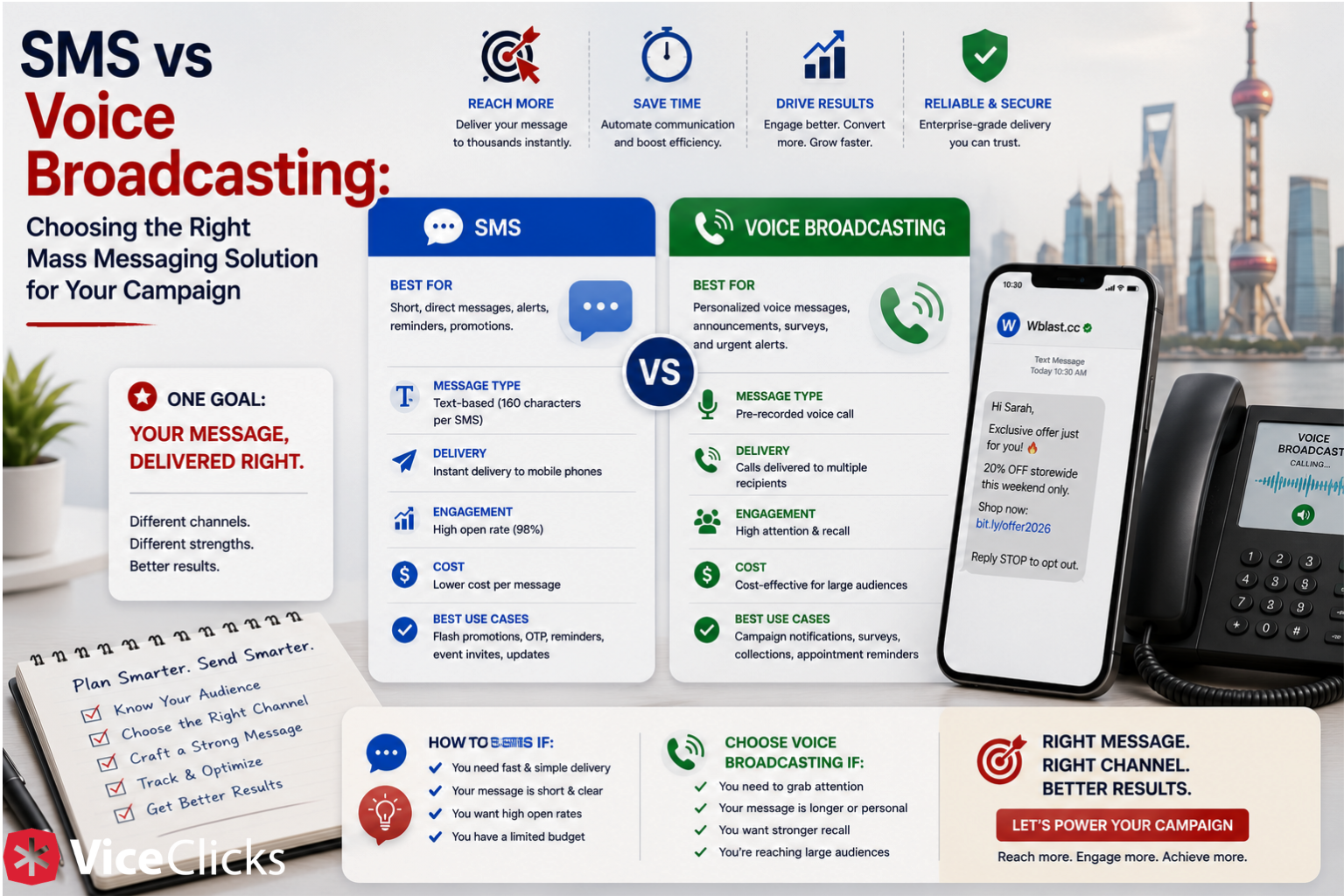
Reaching a large audience quickly is no longer optional for modern campaigns; it is the foundation of effective communication and growth.
Marketers and organisations now rely on mass messaging solutions, with SMS vs Voice Broadcasting emerging as two of the most powerful options for timely, scalable outreach.
Table of Contents
- Overview: Mass Messaging in a Mobile-First World
- What Is SMS Broadcasting?
- What Is Voice Broadcasting?
- Key Differences Between SMS and Voice Broadcasting
- When to Use SMS vs Voice Broadcasting
- Best Practices for High-Performing Campaigns
- Choosing the Right Mass Messaging Solution
- Summary: Matching Channel to Campaign Goals
Overview: Mass Messaging in a Mobile-First World
Mobile phones are now the primary communication device for most consumers, which makes mass messaging solutions essential for any campaign that needs speed and reach.
When evaluating SMS vs Voice Broadcasting, the question is not which channel is universally better, but which one aligns more closely with your audience, message, and goals.
What Is SMS Broadcasting?
SMS broadcasting is the practice of sending text messages in bulk to a segmented or broad audience, usually within seconds.
It is widely used for marketing promotions, alerts, reminders, authentication messages, and two-way conversations, making it a versatile mass messaging solution across many industries.
Why SMS Broadcasting Is So Effective
Recent SMS marketing research consistently reports open rates as high as 98%, with most messages read within minutes of delivery, demonstrating how powerful text messaging is for engagement.
This level of visibility helps campaigns built around SMS vs Voice Broadcasting because SMS can deliver time-sensitive information, links, and short calls to action directly into the user’s native messaging app.
Core Advantages of SMS Broadcasting
- High open and read rates, making SMS ideal for short, urgent updates and promotional offers.
- Low cost per message, especially at scale, which supports frequent outreach and testing.
- Ability to include URLs and track clicks, enabling conversion-focused campaigns and measurable performance.
Because SMS broadcasting is permission-based in many markets, it also tends to reach subscribers who have already expressed interest in the brand or organisation.
What Is Voice Broadcasting?
Voice broadcasting sends pre-recorded audio messages to many phone numbers at once, typically as automated calls.
This type of mass messaging solution can deliver more nuanced and emotional information than text alone, making SMS vs Voice Broadcasting an important comparison for campaigns that rely on tone, urgency, or detailed explanations.
Where Voice Broadcasting Excels
Voice broadcasting is frequently used for emergency alerts, political campaigns, appointment reminders, payment notifications, and customer service updates in markets where phone calls are culturally accepted.
Because callers can hear tone, pace, and emphasis, voice messages are often perceived as more personal and persuasive, particularly for audiences less comfortable with reading texts.
Core Advantages of Voice Broadcasting
- Rich, human-like communication using spoken language, making complex information easier to understand.]
- Potential for interactive responses, such as keypress options during the call for routing or confirmation.
- Strong suitability for urgent announcements where sound can cut through distractions more effectively than text.
These advantages mean voice campaigns often complement SMS in a multi-channel strategy rather than replacing it entirely.
Key Differences Between SMS and Voice Broadcasting
Although SMS and voice broadcasting are both mass messaging solutions, their behaviour and impact differ significantly across cost, engagement, accessibility, and compliance.
Understanding these differences makes it easier to decide when SMS vs Voice Broadcasting is the better fit for a specific campaign.
Channel Comparison: SMS vs Voice Broadcasting
| Aspect | SMS Broadcasting | Voice Broadcasting |
|---|---|---|
| Message format | Short text messages, typically up to 160 characters. | Pre-recorded audio played during automated calls. |
| Engagement behaviour | High open rates and fast reading times, strong performance for links and quick CTAs. | Engagement depends on answer rates and call duration, stronger for emotional or complex messages. |
| Cost structure | Usually lower per contact, cost-effective for frequent sends and large subscriber lists. | Higher relative cost per call due to telephony infrastructure and call duration. |
| User experience | Silent, non-intrusive notifications that recipients can read at their convenience. | More interruptive but also more attention-grabbing, especially for urgent announcements. |
| Tracking and analytics | Supports click tracking, reply monitoring, and automation flows based on behaviour. | Tracks answer rates, keypress responses, and call outcomes rather than link clicks. |
| Accessibility | Requires basic literacy and mobile network coverage. | Ideal for audiences with limited literacy or preference for spoken communication. |
When to Use SMS vs Voice Broadcasting
Choosing between SMS vs Voice Broadcasting depends on campaign type, audience behaviour, regulatory environment, and internal resources.
In many cases, the most effective mass messaging solution is an integrated approach that leverages both channels for different parts of the customer journey.
Best Scenarios for SMS Broadcasting
- Flash sales, voucher codes, and transactional notifications, where speed and click-throughs matter most.
- Appointment reminders and follow-up messages that recipients can save and reference later.
- Opt-in subscriber journeys, onboarding flows, and triggers based on real-time behaviour such as website activity.
Because SMS is easy to automate, it is often the backbone of campaigns that rely on frequent, personalised touchpoints.
Best Scenarios for Voice Broadcasting
- Urgent alerts for schools, healthcare providers, or municipalities, where hearing a voice creates higher perceived importance.
- Political and advocacy campaigns that benefit from emotional delivery or recorded messages from recognisable figures.
- Service updates for audiences who might not read or trust SMS, such as older demographics in certain regions.
Voice broadcasting can also reinforce earlier SMS sends, for example by following a text reminder with a short call as the deadline approaches.
Best Practices for High-Performing Campaigns
Regardless of whether you prioritise SMS vs Voice Broadcasting, the fundamentals of good messaging remain the same: consent, relevance, timing, and clear calls to action.
Applying disciplined best practices will help you maximise the value of your chosen mass messaging solution and protect both brand reputation and deliverability.
Best Practices for SMS Broadcasting
- Obtain explicit consent and make it easy to opt out, following guidance from regulators such as the Federal Trade Commission.
- Keep messages concise but specific, stating the value up front and including only one primary call to action.
- Test send times, copy variations, and segment combinations to discover patterns that drive higher engagement.
These practices support sustainable performance and help ensure your SMS campaigns remain compliant and welcome in recipients’ inboxes.
Best Practices for Voice Broadcasting
- Write conversational scripts that sound natural when spoken, focusing on clarity, brevity, and respectful tone.
- Respect time-of-day limitations and local regulations to avoid disturbing recipients.
- Give listeners a simple next step, whether it is pressing a key, visiting a website, or returning the call.
Because voice messages feel more personal, poor scripting or timing can create negative impressions more quickly, making quality control essential.
Choosing the Right Mass Messaging Solution
For many organisations, the decision about SMS vs Voice Broadcasting is not binary; instead, the goal is to choose a platform that supports both channels and allows campaigns to adapt over time.
Evaluating tools based on reliability, ease of use, analytics, and local support is just as important as comparing the channels themselves.
Key Criteria for Evaluating Platforms
- Delivery performance and regional coverage, ensuring messages reach recipients quickly and consistently.
- Automation capabilities, such as behavioural triggers, segmentation, and personalised workflows.
- Reporting depth across both SMS and voice, including click rates, answer rates, and conversion metrics.
Choosing a flexible platform gives you the ability to refine your mix of SMS vs Voice Broadcasting as data from real campaigns accumulates.
Leveraging Integrated Solutions
Modern providers increasingly combine SMS, voice, and other channels into a single interface, streamlining campaign creation and reporting.
For example, solutions such as WBlast focus on simplifying mass communication workflows so teams can concentrate on audience strategy instead of technical complexity.
Summary: Matching Channel to Campaign Goals
In the debate around SMS vs Voice Broadcasting, the most effective answer is grounded in context: audience preference, message urgency, regulatory rules, and the resources you have to design and maintain campaigns.
SMS broadcasting excels at fast, trackable, cost-efficient communication, while voice broadcasting shines when your campaign depends on emotion, urgency, or spoken clarity.
By framing both options as complementary tools within a broader mass messaging strategy, you can build campaigns that feel timely, relevant, and respectful—while still achieving the reach and impact your organisation needs.